
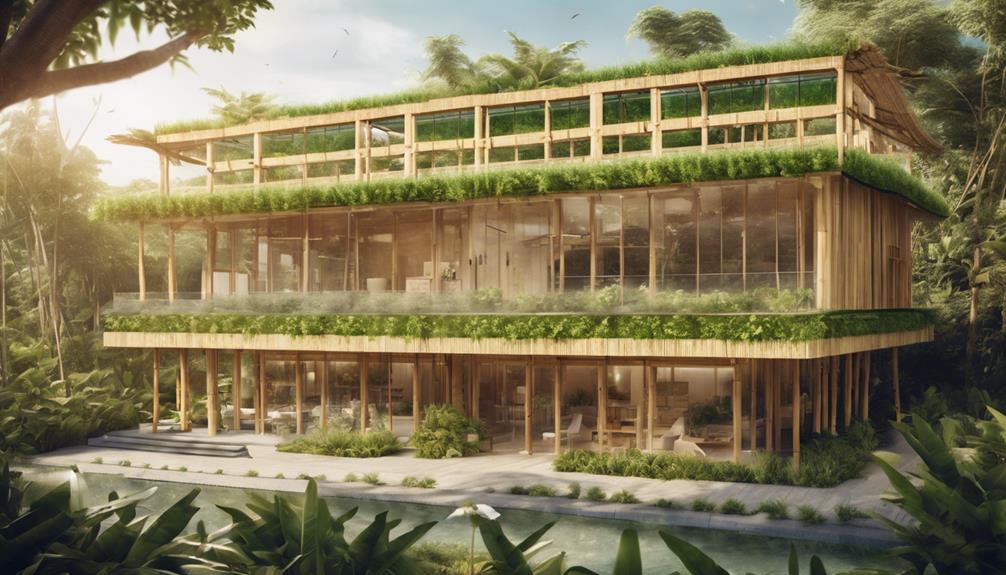
In your quest for sustainable architecture, you can embrace materials like bamboo, which is not only rapidly renewable but also strong and light, making it ideal for construction. You'll find recycled steel advantageous as it supports a closed-loop system and is robust enough for heavy-duty use without degrading over recycling processes. Cork can be your go-to for thermal and acoustic insulation; harvested every nine years, it's incredibly sustainable. If you're leaning towards using innovative construction techniques, consider rammed earth for its excellent temperature regulation and local material use. Each option offers unique benefits and exploring further might reveal which best suits your project's needs.
Bamboo: Versatile and Fast-Growing
While bamboo might seem unassuming, it's actually one of the most versatile and rapidly renewable materials used in sustainable architecture today. You'll find that its growth rate is astonishing, able to mature fully in just three to five years. This starkly contrasts with hardwoods, which can take decades to reach maturity.
You're likely familiar with bamboo's traditional uses in furniture and decor, but its applications in modern building practices are expansive. Its inherent strength and flexibility allow it to withstand high stress and strain, making it an excellent choice for structural elements like beams and scaffolding.
Furthermore, bamboo's natural lightness eases transportation and handling during construction processes.
In addition to its physical benefits, bamboo plays a significant role in environmental sustainability. Its cultivation requires no fertilizer or pesticides and absorbs carbon dioxide at a higher rate than many trees, actively combatting climate change.
As you consider eco-friendly materials for your next project, bamboo stands out as a prime candidate. Its rapid renewability and minimal impact on the environment make it a smart choice for anyone looking to build responsibly.
Recycled Steel: Strength and Sustainability
Recycled steel emerges as another robust choice for sustainable architecture, combining strength with environmental stewardship. You'll find that using recycled steel not only supports the environment by reducing waste but also maintains the material's inherent durability and resilience. It's a win-win; you're making a green choice without compromising on quality or safety.
When you choose recycled steel for your projects, you're participating in a closed-loop system. Steel can be recycled indefinitely without degradation of its properties, offering you a material that's both sturdy and sustainable. This feature ensures that steel production demands less energy and resources compared to using virgin materials, significantly lowering carbon emissions.
Moreover, the process of recycling steel involves re-melting scrap steel, using less energy than the production of fresh steel. By integrating recycled steel in your buildings, you're reducing the industry's carbon footprint and promoting energy efficiency.
Additionally, this practice supports the conservation of iron ore, coal, and limestone, crucial resources that are otherwise heavily consumed in steel production.
Cork: Natural and Renewable
Shifting focus to cork, you'll discover its unique position as both a natural and renewable resource ideal for sustainable architecture. Harvested from the bark of cork oak trees, primarily found in Mediterranean regions, it's a material that doesn't compromise the tree's health or longevity. In fact, cork oaks can live up to 200 years, with the bark regrowing and ready for harvesting every nine years. This makes cork an excellent example of sustainable yield in practice.
You'll be surprised by cork's benefits in construction. It's not just for wine bottles! Its natural properties make it an exceptional insulator, both thermally and acoustically. This means you can reduce energy costs significantly while also buffering against unwanted noise – a win-win for any building project.
Moreover, cork is naturally fire retardant, resistant to mold, and hypoallergenic, ensuring a safer and healthier indoor environment.
Think about the versatility of cork. It can be used in flooring, wall coverings, and even as an external facade. Its lightweight nature also means easier handling and lower transportation emissions. By choosing cork, you're not just building efficiently; you're investing in a material that aligns with the ethos of sustainability.
Rammed Earth: Ancient Techniques Revisited
Stepping back in time, rammed earth construction, an ancient technique, is gaining modern appeal for its sustainability and aesthetic qualities. You're exploring a method that's been used for thousands of years, yet it fits seamlessly into today's eco-friendly building practices.
Rammed earth involves compacting a mixture of natural materials such as soil, clay, sand, and a stabilizer like lime or cement, to form walls. The result isn't just structurally sound but also naturally beautiful, showcasing layered earth tones that blend into natural landscapes.
You'll appreciate that rammed earth isn't only durable but also provides excellent thermal mass, helping to regulate indoor temperatures. This means you can stay cooler in the summer and warmer in the winter, reducing your reliance on heating and cooling systems. Moreover, the materials are typically sourced locally, minimizing transportation emissions and supporting local economies.
As you delve deeper, you'll discover that rammed earth construction is a labor-intensive process, yet it's incredibly rewarding. Each layer of earth is manually tamped down to ensure solidity and stability, creating a sense of connection to the earth and history. It's a sustainable choice that doesn't just build homes but also preserves ancient craftsmanship in a modern world.
Hempcrete: Lightweight and Insulating
While rammed earth reconnects you with ancient building techniques, hempcrete brings a modern twist, using industrial hemp as a core component. This sustainable material consists of hemp shiv mixed with a lime-based binder, creating a lightweight, insulating product that's perfect for construction. You'll find it not only eco-friendly but also remarkably efficient in regulating indoor temperatures.
Hempcrete's breathability offers unique moisture-handling properties, reducing the risk of mold and maintaining air quality inside your home. It's a non-toxic choice, ensuring you're surrounded by materials that keep your living environment healthy. Moreover, its lightweight nature means easier handling and lower transportation costs compared to traditional building materials.
Its installation is straightforward, and you don't need to be a seasoned builder to work with it. Hempcrete fills forms around structural frames, setting into a stone-like material that provides excellent insulation and robustness without the bulk of concrete. Over time, the material petrifies, enhancing its durability and strength.
You'll appreciate that hempcrete isn't only a step towards sustainable living but also a cost-effective solution in the long run. Its insulating properties can significantly reduce your energy bills, making it a smart choice for eco-conscious builders and homeowners alike.
Structural Insulated Panels: Energy Efficiency
In the realm of modern construction, Structural Insulated Panels (SIPs) stand out for their remarkable energy efficiency. You'll find that SIPs are high-performance building panels used in floors, walls, and roofs for residential and light commercial buildings. They're made from an insulating foam core sandwiched between two structural facings, typically oriented strand board (OSB).
What sets SIPs apart is their incredible ability to maintain interior climates. This means you can keep your home warmer in the winter and cooler in the summer without relying heavily on heating and cooling systems. Consequently, you're not only reducing energy consumption but also cutting down on utility bills significantly.
Choosing SIPs also speeds up your construction process since they come prefabricated. You'll spend less time on site, reducing labor costs and minimizing construction waste. This streamlined approach not only makes your project more efficient but also contributes to a lower carbon footprint.
Moreover, the airtight nature of SIPs greatly reduces air leaks compared to traditional framing. This feature further enhances their energy efficiency, ensuring minimal heat loss and better overall thermal performance.
Green Roofs: Urban Biodiversity Enhancement
As cities expand, green roofs have emerged as essential tools in enhancing urban biodiversity. You've likely seen these verdant terraces atop buildings, not just beautifying the skyline but also hosting a variety of plants and wildlife. They're more than just eye candy; green roofs play a pivotal role in creating habitats for pollinators and local fauna, which are often struggling to survive in urban environments.
You can think of these green roofs as mini ecosystems. They don't just support plant species; they also provide food and shelter for insects, birds, and even small mammals. This reintroduction of nature not only helps maintain ecological balance but also bridges the gap between urban and natural environments.
Moreover, you're not just helping the local wildlife. Green roofs can improve air quality and reduce the urban heat island effect, making your city a cooler place to live.
Conclusion
You've explored a range of innovative materials that not only promise sustainable building solutions but also respect our planet. From the rapid renewability of bamboo and cork to the recyclability of steel, these materials offer you the tools to design greener. Embrace ancient methods like rammed earth, or modern technologies like structural insulated panels and hempcrete, to enhance energy efficiency. Don't forget, integrating green roofs can further increase urban biodiversity, making your architectural projects part of the solution to environmental challenges.
Related articles: What Are the Top Sustainable Materials in Commercial Architecture?