
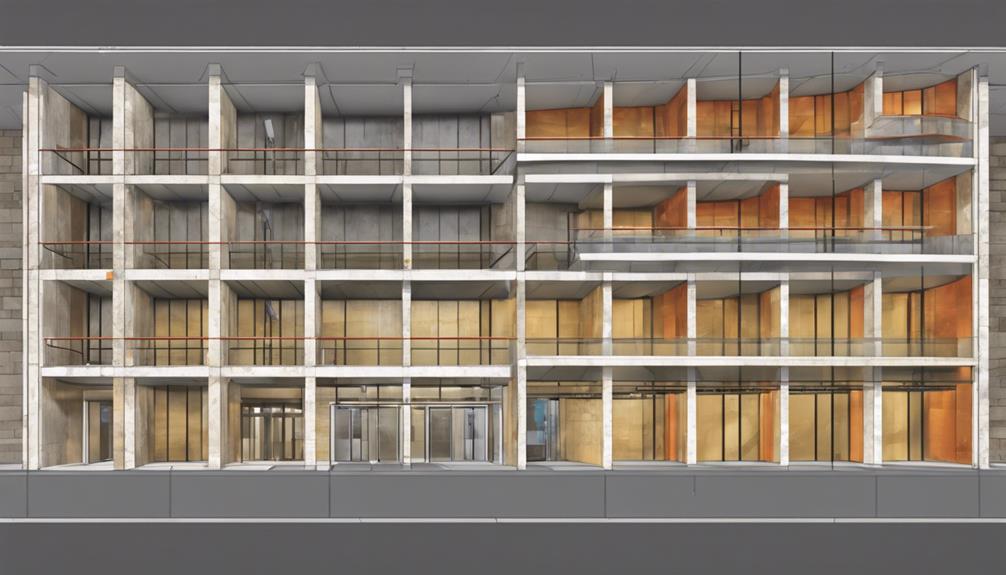
For your commercial building, consider these top three fire-resistant materials to enhance safety. First, concrete not only slows down fire spread through its dense composition but also provides excellent insulation against heat. Next, gypsum board is another great choice; it's cost-effective, easy to install, and releases steam to combat fires effectively. Finally, fire-resistant glass can withstand extreme temperatures and prevent shatters, helping to maintain building integrity during a fire. Each material offers unique advantages for protection and compliance with safety regulations. Exploring the specifics and applications of these materials will equip you with a robust understanding of how to safeguard your property.
Exploring Concrete's Fire Resistance
When considering building materials for fire safety, you'll find that concrete stands out due to its impressive inherent fire resistance. This material's ability to withstand extreme heat makes it a top choice for structures that prioritize safety and durability. Concrete doesn't burn, melt, or release toxic fumes when exposed to fire, which significantly enhances the overall safety of the buildings that utilize it.
You might be intrigued to know that concrete's composition—cement, water, and aggregates—contributes to its fireproof qualities. When exposed to high temperatures, concrete undergoes a process known as dehydration. This is where the water inside concrete evaporates, helping to absorb and dissipate heat, which slows down the spread of fire. This attribute not only protects the structural integrity of a building but also provides crucial extra time for evacuation during an emergency.
Moreover, the thickness and density of concrete play a pivotal role in its fire resistance. Thicker concrete slabs and walls offer better insulation against heat and are less likely to crack under fire conditions. It's essential to consider these factors when you're planning the construction of a new building or upgrading an existing one to enhance fire safety measures.
Benefits of Gypsum Board
Gypsum board, commonly known as drywall, offers significant advantages in fire safety, making it an essential component in modern building design. You'll find that its fire-resistant properties mainly stem from the water molecules trapped within its core, which, when exposed to high temperatures, are released as steam, effectively slowing down the spread of fire. This inherent ability to resist fire for a significant period allows you and your team more time to evacuate in the event of a fire, enhancing overall safety.
Moreover, gypsum board isn't just about safety. It's also incredibly versatile and cost-effective. You can use it in various parts of your building, from interior walls to ceilings, without straining your budget. Its ease of installation and finishing reduces labor costs and construction time significantly.
Additionally, gypsum board contributes to better sound insulation between rooms and can help in creating a quieter work environment. This material is also well-regarded for its ability to be recycled, aligning with greener building practices by reducing waste.
Incorporating gypsum board in your construction plans isn't just a building code compliance measure; it's a smart, economical choice that enhances the fire-resistance, comfort, and sustainability of your commercial property.
Evaluating Fire-Resistant Glass
After exploring the benefits of gypsum board, consider another key material in fire safety: fire-resistant glass. This innovative material plays a crucial role in protecting buildings from fire while maintaining visibility and light transfer. You'll find that fire-resistant glass isn't just ordinary glass. It's specially engineered to withstand extreme temperatures without shattering or losing integrity.
When you're evaluating fire-resistant glass, look at its fire ratings. These ratings, expressed in minutes (such as 60, 90, or 120), indicate how long the glass can withstand exposure to fire before it fails. The higher the number, the greater the protection. It's also essential to check if the glass meets the specific building code requirements for your project.
Another aspect you'll want to consider is the type of fire-resistant glass. There are generally two types: insulated and laminated. Insulated glass units consist of multiple glass panes separated by an air space, providing better heat resistance.
Laminated glass, on the other hand, includes layers of glass bonded with a tough, clear interlayer, offering increased safety and sound reduction.
Choosing the right fire-resistant glass can significantly enhance your building's safety and compliance. Make sure you consult with a specialist to find the best fit for your needs.
Conclusion
As you've explored, concrete's durability under fire is unmatched, making it a top choice for your building's structure. Gypsum board offers not only ease of installation but also significant protection by slowing fire spread. And don't overlook fire-resistant glass; it lets you maintain aesthetic appeal without compromising safety. By choosing any of these materials, you're enhancing your commercial building's safety, ensuring it stands strong against fire while keeping occupants secure. Make the smart choice, and invest in these reliable materials.
Related articles: Sustainable Materials for Office Buildings · Top Green Materials for Office Construction · Why Choose Eco-Friendly Materials for Offices?