
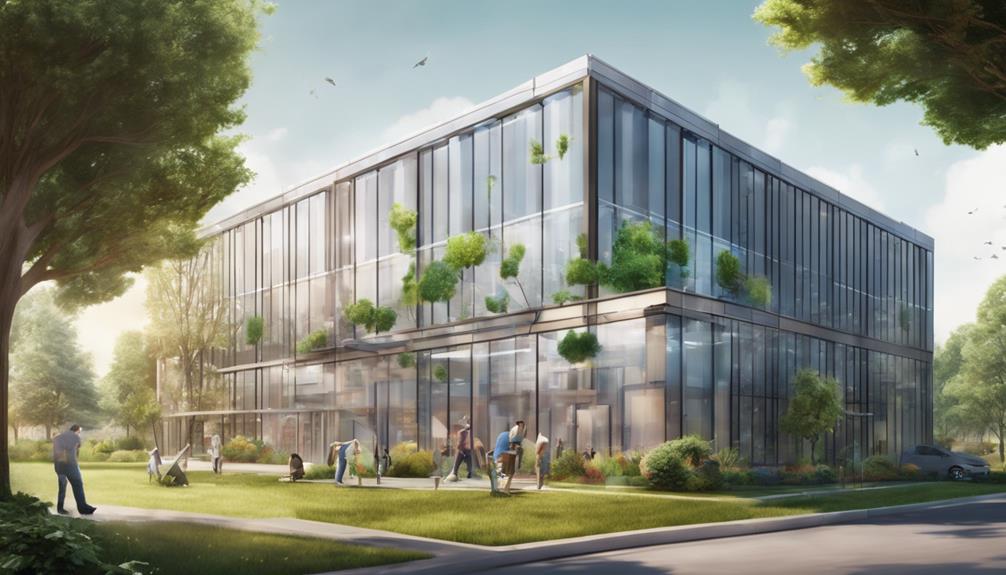
To ensure your commercial building is eco-friendly, start by optimizing energy efficiency with LED lighting and high-efficiency HVAC systems. You should also incorporate renewable energy sources, such as solar panels and wind turbines. Don't forget water conservation; install low-flow fixtures and consider rainwater harvesting systems. Use sustainable materials like bamboo and recycled steel to reduce environmental impact. Enhance indoor environmental quality with natural light and low-emission materials. Implement waste reduction strategies, including recycling programs and reusable containers. Lastly, maintain a long-term focus on sustainability by continuously monitoring and refining your practices. There's more to discover that will transform your approach and results.
Optimize Energy Efficiency
To optimize energy efficiency in commercial buildings, you should start by upgrading to LED lighting and installing high-efficiency HVAC systems. LEDs use at least 75% less energy and last 25 times longer than incandescent lighting, which means you're not only reducing energy consumption but also cutting down on maintenance costs and replacement frequency.
On the other hand, high-efficiency HVAC systems are crucial as they account for a significant portion of energy use. These modern systems adjust more accurately to temperature changes and occupancy levels, ensuring that energy isn't wasted.
Next, consider enhancing your building's insulation and sealing any leaks. Proper insulation helps maintain the desired indoor temperature, reducing the workload on your heating and cooling systems. Pay special attention to windows, doors, and other areas prone to air leaks. Sealing these can prevent unwanted heat exchange and further drive down your energy bills.
You should also upgrade to energy-efficient appliances and equipment throughout your building. Look for products with the ENERGY STAR label to ensure they meet energy efficiency guidelines set by the U.S. Environmental Protection Agency. This step not only contributes to energy savings but also supports your business's sustainability goals. By implementing these strategies, you'll see a marked improvement in your building's energy performance.
Use Renewable Energy Sources
In addition to optimizing energy efficiency, integrating renewable energy sources into your commercial building's energy strategy can significantly reduce reliance on fossil fuels. Solar panels, wind turbines, and geothermal systems aren't only eco-friendly but also cost-effective in the long run. They'll help you cut down on energy bills and minimize your carbon footprint.
You can start small by installing solar-powered lighting for outdoor areas like parking lots and pathways. This is a low-risk way to dip your toes into renewable energy without committing to a full-scale overhaul. As you see the benefits, you might consider larger installations like rooftop solar panels or even a building-integrated photovoltaic system.
Don't overlook the potential of wind energy, especially if your building is located in a windy area. Small-scale wind turbines can supplement your energy needs and further decrease your dependence on traditional power sources.
Geothermal heat pumps are another excellent option. They use the stable underground temperature to heat and cool your building more efficiently than conventional systems.
Enhance Water Conservation
Adopting water-saving technologies and practices can dramatically reduce your building's water footprint. You'll find that integrating low-flow fixtures in restrooms, such as toilets, faucets, and showers, significantly curtails water usage without sacrificing performance.
Consider employing water-efficient landscaping that requires minimal irrigation. Opting for native plants and drought-resistant varieties not only conserves water but also reduces maintenance costs.
Implementing a rainwater harvesting system can be another game-changer for you. This system collects rainwater from roofs, storing it for later use in irrigation or even plumbing systems, depending on local regulations and the system's design. It's a sustainable solution that diminishes your reliance on municipal water supplies and lowers your utility bills.
Don't overlook the potential of upgrading to water-smart appliances. Energy Star certified dishwashers and washing machines use less water and energy, boosting both water conservation and energy savings.
Regular maintenance of your water systems also plays a crucial role. Fixing leaks and insulating pipes ensure that water and energy aren't wasted, further optimizing your building's operational efficiency. By taking these steps, you're not just saving water; you're building a foundation for sustainability in your commercial property.
Select Sustainable Materials
Selecting sustainable materials not only reduces your building's environmental impact but also enhances its long-term viability. As you choose materials, opt for those sourced responsibly. Look for certifications like FSC for wood or Green Seal for other building materials, ensuring they're sustainably harvested or produced.
Consider the life cycle of the materials you're using. Materials that are durable and require less maintenance reduce the need for frequent replacements and the waste associated with it.
For instance, recycled metal or reclaimed wood not only offers unique aesthetic appeal but also decreases demand on virgin resources.
You'll also want to think about the energy used in the production of your materials. Locally sourced materials can significantly cut down on transportation emissions, supporting not just the environment but also the local economy.
Additionally, using materials like bamboo, which grows quickly and absorbs carbon dioxide at a high rate, can further boost your building's green credentials.
Improve Indoor Environmental Quality
While selecting sustainable materials lays the foundation for a green building, improving the indoor environmental quality significantly enhances occupant health and productivity. You'll find that better air quality not only reduces health risks but also boosts cognitive functions.
Start by optimizing your HVAC system for efficient air filtration and ventilation. This includes regular maintenance and choosing filters that trap smaller particles, thus ensuring clean air circulation.
You should also introduce indoor plants, which naturally absorb pollutants and emit oxygen, enriching the workspace. Implementing low-emission materials for furniture, paints, and carpets can significantly cut down on volatile organic compounds (VOCs) that deteriorate air quality. Opt for products certified by recognized environmental standards to ensure they meet safety thresholds.
Don't overlook the importance of natural light. Maximizing daylight not only saves energy but improves mood and energy levels. Consider installing larger windows or skylights, and use reflective surfaces to enhance light distribution without the glare. Additionally, ensure that artificial lighting systems are designed to complement natural light, using energy-efficient bulbs and fixtures that minimize eye strain and energy use.
Implement Waste Reduction Strategies
As you transition from enhancing indoor air quality to focusing on waste management, it's crucial to implement effective waste reduction strategies in your commercial building. Start by conducting a waste audit to identify the main sources of waste. This understanding allows you to target the biggest problems first.
You can significantly cut down on waste by setting up a comprehensive recycling program. Place clearly labeled recycling bins in accessible areas to encourage use. Educate your staff about what can be recycled and why it matters. Partner with local recycling facilities to ensure your waste doesn't end up in a landfill.
Consider going paperless where possible. Digital documents not only reduce paper waste but also streamline operations and improve accessibility. If printing is necessary, opt for double-sided printing to use less paper.
Encourage the use of reusable containers and utensils in the cafeteria. Provide incentives for employees who adopt these practices, such as discounts or recognition programs.
Invest in durable, repairable furniture and fixtures that won't need to be replaced often. Choosing long-lasting materials reduces waste and saves money in the long run.
Focus on Long-Term Sustainability
To truly future-proof your commercial building, it's essential to focus on long-term sustainability. This means thinking beyond immediate gains and considering how your choices affect the future. You're not just constructing a building; you're creating a legacy that should stand the test of time and adapt to changing environmental standards.
Start with energy-efficient designs that go beyond current regulations. Invest in renewable energy sources like solar panels or wind turbines, which can drastically reduce your building's carbon footprint.
It's also smart to install advanced building management systems that optimize energy and water usage, ensuring your building remains efficient for decades.
Materials matter too. Choose sustainably sourced or recycled materials that are durable and require less maintenance. This approach not only conserves resources but also reduces the need for future renovations.
Think about the building's surroundings. Integrating green spaces or living roofs can improve air quality and provide natural insulation. Plus, these features make your building more attractive to tenants who value sustainability.
Conclusion
You've got all the tools to transform your commercial building into a beacon of sustainability. Start by optimizing energy use and tapping into renewable sources. Make water conservation a priority and choose materials that won't harm the planet. Improve the air your team breathes and cut down on waste. Remember, every small change contributes to a more sustainable future. Keep your focus on long-term impacts, and you'll not only save money but also make a significant environmental difference.
Related articles: Advantages of Sustainable Commercial Building Practices · Commercial Construction: Sustainable Building Benefits Tutorial · Top Benefits of Sustainable Building Practices in 2024