
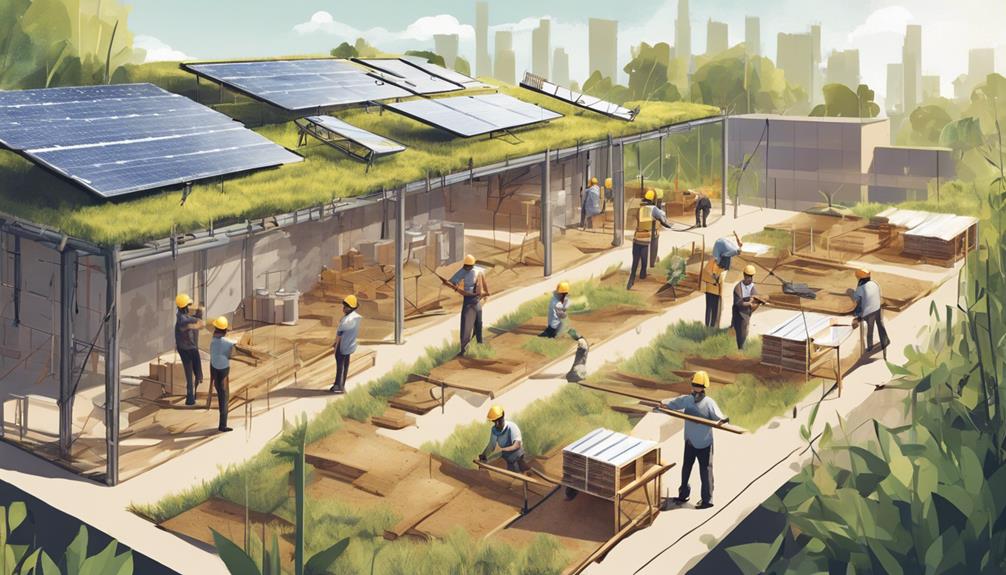
Maximizing savings with sustainable commercial construction means you'll reduce your operational and maintenance costs while boosting property values. By installing renewable energy sources like solar panels, you can slash utility bills and even profit from selling excess energy back to the grid. You'll also benefit from substantial tax breaks and grants designed specifically for green buildings. Water conservation efforts and energy-efficient materials further decrease recurring expenses, ensuring a long-term return on your investment. Opt for durable, modular designs to adapt and expand with minimal additional cost. There's much more to uncover about how these strategies can benefit your business financially and ethically.
Benefits of Energy-Efficient Materials
Integrating energy-efficient materials into commercial construction not only reduces energy consumption but also significantly cuts operational costs. By choosing materials like advanced insulation, low-emissivity windows, and reflective roofing, you're stepping towards a more sustainable future. These materials help maintain consistent indoor temperatures, lessening the load on heating and cooling systems, which in turn lowers your energy bills.
But it's not just about saving money. Using energy-efficient materials also enhances the overall comfort and air quality inside your building. Advanced insulation, for instance, does a stellar job at noise reduction, creating a quieter, more peaceful environment.
Low-emissivity windows reduce UV exposure, which protects interiors from sun damage and provides a better light quality that can boost the mood and productivity of occupants.
Moreover, opting for these sustainable materials can increase your property value. Today's market increasingly favors eco-friendly buildings, making your property more attractive to potential buyers or renters who are conscious of their environmental impact. They know they'll benefit from lower utility costs and a smaller carbon footprint, making your building a preferred choice. So, by investing in energy-efficient materials, you're not just saving now—you're setting up your property for future success.
Long-Term Cost Reduction Strategies
Shifting your focus to long-term cost reduction strategies can significantly enhance your building's profitability and sustainability. Consider implementing advanced building automation systems. These systems optimize energy use and reduce waste by automatically adjusting lighting, heating, and cooling based on occupancy and ambient conditions. You'll see a drop in utility bills and an increase in operational efficiency.
Next, focus on high-quality, durable materials for construction. Initially, these may have a higher upfront cost, but they drastically reduce the need for frequent repairs and replacements. Opt for materials that have longer lifespans and require less maintenance. This approach not only saves money over time but also minimizes the environmental impact of your operations.
Additionally, design your building with modularity in mind. Structures that can adapt to different uses can extend their usability and desirability, potentially increasing their rental or resale value. Modular designs allow for easier and cost-effective renovations or expansions as your needs change, without extensive downtime or new construction costs.
ROI From Renewable Energy Installations
Over the past decade, the return on investment (ROI) from renewable energy installations has become increasingly attractive for commercial construction projects. You've likely noticed a surge in businesses adopting solar panels, wind turbines, and biomass systems. This isn't just about being eco-friendly; it's smart economics.
Investing in renewable energy can significantly reduce your utility bills. Solar panels, for instance, might've a high upfront cost, but the long-term savings are substantial. They're designed to last 25 years or more, ensuring you save on electricity for decades.
Similarly, wind energy, while dependent on location, can offer immense savings and even profit opportunities through selling back excess power to the grid.
Beyond direct savings, there are financial incentives like tax breaks and grants specifically designed to lower the initial financial barrier. These incentives make the math work out favorably when you're crunching the numbers on potential investments.
Moreover, adopting renewable technologies enhances your brand's image, appealing to a growing demographic of environmentally conscious consumers and businesses. This can lead to increased customer loyalty and potentially higher sales, indirectly boosting your ROI.
Water Conservation Techniques and Savings
While renewable energy solutions like solar and wind power significantly lower utility costs, implementing water conservation strategies in commercial construction also offers substantial economic benefits. You'll find that integrating technologies like low-flow fixtures and water-efficient landscaping not only reduces your water bill but also minimizes your environmental impact.
Start by installing smart irrigation systems that use weather forecasts and soil moisture sensors to water only when necessary. This can cut your outdoor water use by up to 50%. Inside, opt for water-saving fixtures in sinks, toilets, and showers. These reduce flow rates significantly, which means you're using less water with every flush and rinse.
Also, consider harvesting rainwater for non-potable uses like flushing toilets and watering landscapes. By collecting what nature provides, you're easing the demand on municipal systems and lowering your utility costs even further. It's a practical step that aligns with a broader commitment to sustainability.
Lastly, don't overlook the power of educating your building users about water conservation. Simple practices such as reporting leaks and turning off taps can lead to substantial savings over time. When you combine these practical steps, the cost savings can be as impactful as your reduced water footprint.
Tax Incentives for Green Buildings
In addition to environmental benefits, green buildings often qualify for various tax incentives that make sustainable construction financially appealing. These incentives are designed to encourage you, as a developer or business owner, to invest in eco-friendly practices. They can significantly offset the initial costs of green construction.
You'll find that numerous federal, state, and local governments offer these tax breaks.
For instance, the federal government provides a tax deduction for energy-efficient commercial buildings that achieve a specific percentage of energy cost savings in comparison to a baseline building. This deduction can be as much as $1.80 per square foot, depending on the energy savings achieved.
Moreover, some states offer additional incentives like tax credits, rebates, or grants for incorporating renewable energy sources, such as solar or wind power, into your building. These can reduce your upfront costs even further and enhance the long-term savings on energy bills.
To maximize these benefits, it's crucial to stay informed about the specific requirements and deadlines associated with each incentive. Consulting with a tax professional who specializes in green building incentives can ensure you're capturing all the available benefits, making your sustainable investment even more worthwhile.
Maintenance Costs of Sustainable Structures
Sustainable buildings not only reduce environmental impact but also generally incur lower maintenance costs over time. When you opt for materials that are durable and eco-friendly, you're not just thinking about the environment; you're setting yourself up for fewer repair needs and replacements. For instance, materials like composite decking or high-quality metal roofing can last decades longer than traditional alternatives.
Moreover, the design of sustainable structures often includes features that inherently reduce upkeep. Green roofs, for example, protect the underlying roofing material from weather damage while improving building insulation. This dual functionality means you're saving on heating and cooling costs and on potential roof repairs.
You'll also find that many sustainable technologies require less maintenance than their conventional counterparts. Solar panels, once installed, need minimal upkeep apart from occasional cleaning to keep them efficient.
Similarly, water reclamation systems used in sustainable buildings are designed with simplicity and durability in mind, ensuring they last longer without needing frequent fixes.
Impact of Sustainable Design on Valuation
Adopting sustainable design significantly enhances a property's market value. When you integrate eco-friendly features into your commercial property, you're not just ticking boxes for environmental compliance; you're actively boosting its appeal to potential buyers and tenants who value sustainability. This increased demand can drive up your property's valuation.
Consider the savings on operational costs brought by sustainable technologies. Features like energy-efficient lighting, solar panels, and improved insulation reduce the day-to-day running expenses. These aren't just attractive perks; they're compelling financial benefits for future occupants. Lower utility bills mean tenants are willing to pay a premium on rent, directly affecting your property's income potential and thus its value.
Moreover, as environmental regulations become stricter, properties already meeting these standards avoid potential retrofitting costs. This foresight in design places your property ahead in the market, appealing to a broader base of eco-conscious investors and maintaining its competitiveness.
Incorporating green spaces and better air quality standards also enhances worker productivity and wellbeing, another selling point for your property. By focusing on sustainable design, you're not only investing in the environment but also in a lucrative aspect of real estate that's increasingly recognized by the market.
Case Studies: Profitable Green Construction
Why consider real-life examples of profitable green construction? Seeing success stories where sustainability is both practical and profitable can inspire you and offer a blueprint for your projects. Let's explore a few notable cases.
First, consider the Edge in Amsterdam, often cited as one of the greenest office buildings in the world. Utilizing an energy-efficient design and state-of-the-art technology, it consumes 70% less electricity than typical office buildings. This efficiency didn't just reduce its carbon footprint; it also significantly lowered operating costs, enhancing its investment appeal.
Across the pond in New York, the Bank of America Tower stands as a beacon of green construction. Built with recycled and sustainable materials, it features a greywater system and an ice storage facility for cooling. These innovations haven't only earned it a LEED Platinum certification but have also attracted premium tenants willing to pay higher rents for a greener workspace, boosting its profitability.
These examples show that investing in sustainable construction isn't just good for the planet; it's a savvy business strategy. You can achieve similar success by prioritizing green practices that align with economic benefits. This approach not only helps the environment but also enhances your competitive edge in the real estate market.
Conclusion
You'll see significant benefits when you invest in sustainable commercial construction. Not only do energy-efficient materials and renewable energy installations cut down long-term costs, but they also qualify you for tax incentives. Plus, incorporating water conservation techniques boosts your savings even further. Sustainable buildings typically have lower maintenance costs and a higher valuation on the market. By examining case studies, you'll find that green construction isn't just good for the planet—it's profitable for your business too.
Related articles: What Are the Advantages of Eco-Friendly Commercial Buildings? · 7 Tips for Sustainable Commercial Building Practices · Advantages of Sustainable Commercial Building Practices